AI Auction Cataloging Software
From photograph and notes to a finished lot description, estimate and category in minutes, in your auction house's own voice.
Circuit Auction's AI cataloging is built into the platform that runs the sale, so the catalog is never re-keyed anywhere.
Cataloging Is Where Auction House Time Goes
Every lot needs a title, a description, a condition note, a category and an estimate before it can sell. For a thousand-lot sale, that is weeks of specialist time, most of it spent typing rather than judging. AI auction cataloging software changes the ratio. The specialist supplies the judgment, the AI supplies the first draft, and the catalog is ready in days.
AI Cataloging Features
The tools that take a lot from intake to a published catalog entry


How AI Cataloging Works on Circuit
1. Intake
The consignment is logged against the consignor's record in the CRM, with the agreement and lot list attached. Items are photographed and given lot numbers, in bulk or one at a time.
2. Draft
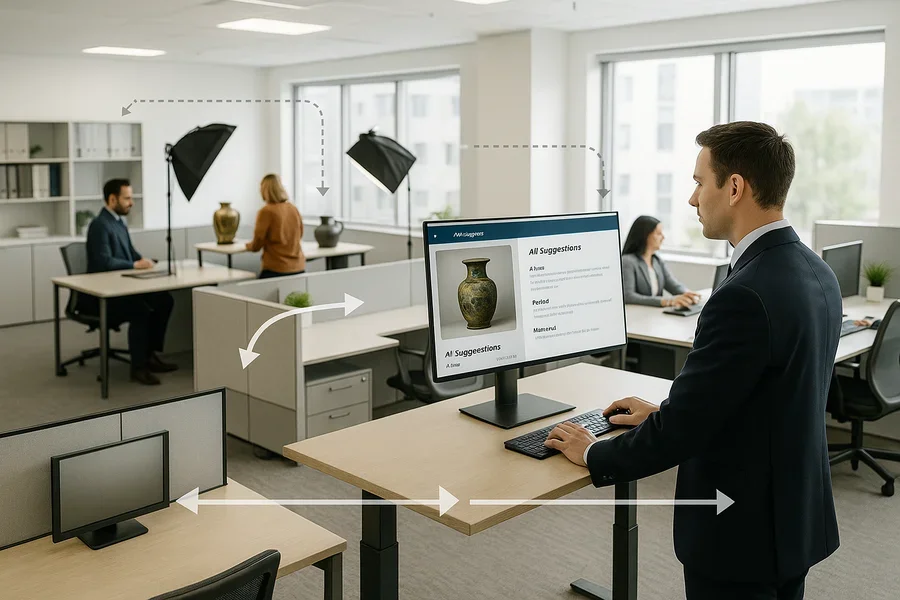
For each lot, the specialist adds a few notes: maker, date, grade, anything the photograph does not show. Circuit generates the title, description, condition note, category and suggested estimate in your house style.
3. Review
The specialist reads, corrects and approves. Attribution and grading are confirmed by a person. Revision control keeps the trail. Highlight lots get the full expert treatment; the AI has already handled the routine ones.
4. Publish
The approved catalog goes live on your website for the timed or live sale, translated where needed, with category alerts sent to collectors who follow those fields.
Why Not Just Use a General AI Chatbot?
Some auction houses paste notes into a general chatbot and copy the answer back into their catalog tool. It works for one lot. It does not work for a sale.
AI Auction Cataloging FAQ
It turns a photograph and a specialist's short notes into a full lot entry: title, description, condition notes, category and a suggested estimate, written in your auction house's style. The specialist reviews and edits rather than writing from a blank page. Circuit also matches uploaded images to lots in bulk and translates finished catalogs into other languages.
The AI drafts; your specialist decides. Grading, attribution, authenticity and the final estimate are always confirmed by a person before the lot is published. Circuit's revision control keeps every edit, so you can see what the draft said and what the cataloger changed.
Circuit's cataloging is built for collectibles: coins, stamps, fine art, antiques, watches and jewelry, rare books, sports memorabilia, trading cards and similar fields. Category templates carry the right fields, such as grading services for coins, catalog numbers for stamps or provenance and medium for art.
Auction houses on Circuit report cataloging sales several times faster than by hand, with the biggest savings on mid-value lots where a full specialist write-up was never economic. The specialist's time moves to the lots that need it.
Yes. Descriptions can be generated and translated into more than 40 languages, so an auction house can publish one catalog for domestic and international bidders without a translation agency.
No. It is part of the Circuit Auction platform, so a lot catalogued with AI goes straight into your timed or live sale, and its results feed invoicing, settlement and the CRM without any export.
Bring Ten Lots to the Demo
Send us photographs and notes for ten of your lots before the call. We will catalog them live with you, in your house style, and you can judge the drafts yourself.
🏆 Bottom of Page Achievement Unlocked! 🏆
You're officially auction-software curious. Let's turn that curiosity into your success – use the form below and we'll talk details.
Write to Us