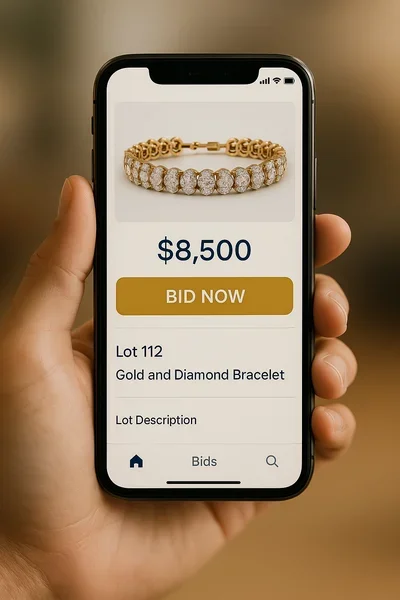
Proxibid is where a great many North American auction houses first put a live sale online. It started in Omaha, grew up on farm equipment and vehicles, and along the way became the default marketplace for cataloged firearms sales and a serious second home for coins, antiques and estates. If your buyers are contractors and farmers, it is probably still the right place for you. This guide is for the auction house selling collectibles, firearms or antiques that is now paying 5% of hammer for an audience it is not sure it needs, and wondering what the alternatives look like.
We cover who runs Proxibid and what it charges in 2026, how its partner tiers work and what you give up to qualify for them, the reasons auction houses look elsewhere, the two kinds of alternative, a cost comparison with real numbers, and how to move without losing your bidders. We build one of the alternatives, so read the Circuit section with that in mind. Every figure about Proxibid comes from its own published pages, listed at the end, and was checked on October 13, 2026.
Who Runs Proxibid, and What It Charges
Proxibid, Inc. began in Nebraska and now gives its headquarters as New York, New York. Since February 2020 it has been part of Auction Technology Group (ATG), the London-listed owner of LiveAuctioneers, the-saleroom, BidSpotter, EstateSales.NET, Auction Mobility and Wavebid, the back-office software Proxibid bought in January 2019. Proxibid says more than 4,000 auctioneers, asset owners and consignors sell on it and that 13,000 new buyers open an account each month. We wrote a separate guide to who owns the auction marketplaces if the ATG picture is new to you.
The 2026 master rate card splits sellers into three partner tiers, Bronze, Silver and Gold, plus a Branded White Label option. For an auction house selling arts and antiques, estates, firearms or anything outside equipment, vehicles and real estate, the figures are:
| Item | Bronze | Silver | Gold |
|---|---|---|---|
| Commission on hammer (arts and antiques, estate, firearms, “all other”) | 5% | 5% | 5% |
| Live auction event fee | $675 + $0.50 per lot, capped at $1,275 | $675 | $525 |
| Timed auction event fee | $275 | $225 | $25 |
| Marketing (AMP) pricing | Standard | 10% off | 20% off |
| Rebate on ATG cross-listing event fees | 10% | 15% | 20% |
| Cross-listing a live sale to BidSpotter | $1,125 | $465 | $160 |
| One-time activation fee (live, and again for timed) | $500 | $500 | $500 |
Commission is lower in other categories: 2% for farm, heavy construction and commercial trucks, 3% for cars and vehicles, and 3% for existing or 5% for new industrial and liquidation sellers. Real estate is $1,000 per event plus $60 per registered bidder. To get a category rate, 75% of the lots in the catalog must be approved items in that category; otherwise the 5% “All Other” rate applies, and approval is “at the sole discretion of Proxibid”.
Payments through atgPay, Proxibid’s processor, cost 3.99% plus $0.25 per card transaction (4.49% for high-risk categories) and 1% plus $0.50 for ACH. If you want a Proxibid agent in the room for a live sale, that is $1,250 to $3,000 per day plus travel depending on your sales volume, or $90 an hour remote with a four-hour minimum. Accounts inactive for twelve months pay the activation fee again. And the rate card says, as every ATG rate card does, that Proxibid “reserves the right to change its Fee Schedule at any time”.
What bidders pay
Proxibid does not publish a buyer-side fee and its user agreement says the buyer’s premium “is set by the Seller”. But the same agreement describes a “Proxibid Premium”: a percentage of every successful bid, “to be solely determined by Proxibid based on the event”, which the seller “incorporates into the total purchase price due from the successful Buyer”. If the sale falls through, the buyer owes that premium to Proxibid directly. In practice, many auction houses pass it on as a visible surcharge: a 10% premium plus a 3% Proxibid charge on the lot page, or a higher premium for Proxibid bidders than for bidders in the room or on the auction house’s own site.
That practice is now policed in some categories. From January 1, 2026, live auctions in heavy construction, agriculture, commercial trucks, cars and vehicles and industrial equipment fall under Proxibid’s fair pricing policy, which can add a $1,500 event fee surcharge to an auction that offers a different online premium on a third-party platform. Arts, antiques, estates and firearms are not in scope today. The policy is worth reading anyway, because it shows the direction of travel.
The Partner Tiers Are Paid For in Exclusivity
This is the part of the rate card worth reading twice. The tiers are not earned by volume. Bronze has no requirements. Silver requires what the rate card calls a Preferred Client Usage Model, which is one of three things: using Proxibid’s branded white label as your only white label bidding solution, using ATG marketplaces exclusively with no white label bidding at all, or both. Gold adds a requirement that atgPay invoices are sent for every auction.
Translated: the $150 per live sale and $250 per timed sale you save by moving from Bronze to Gold are bought by agreeing not to run bidding on your own website with anyone but ATG, and by routing every bidder payment through ATG’s processor at 3.99% plus 25 cents. An auction house that runs its own platform, or lists on HiBid or Invaluable as well, is a Bronze partner by definition.
The Branded White Label option is Proxibid’s answer to an auction house that wants its own bidding page. It costs from $500 a month for bidding and from $250 a month plus a $500 setup fee for a website “powered by ATG”, with unlimited events. It still charges the full category commission, 5% for arts, antiques and firearms, on the sales that run through it. A quarter of those commission invoices come back as marketing credits to spend on Proxibid or LiveAuctioneers, which is a rebate you can only use to buy more of the marketplace.
Why Auction Houses Look for a Proxibid Alternative
Five percent is the industry’s top rate. HiBid charges 2%. Circuit’s Standard plan charges 2%. Invaluable’s parity program runs from 5% down to 1% as the hammer rises. LiveAuctioneers, Proxibid’s sister, also charges 5%. For a collectibles auction house, Proxibid is priced like LiveAuctioneers without LiveAuctioneers’ arts and antiques audience.
The bidders are general, and the biggest groups are not yours. Proxibid’s own description of its buyers runs “farmers, fashionistas, construction contractors, art lovers, car junkies”. Its fair pricing policy, its partner network and its cross-listing deals are all built around equipment, vehicles and trucks. A firearms or coin auction house is well served; a fine art or stamp auction house is in the wrong room.
The rate card rewards you for not having options. The Silver and Gold requirements are a loyalty program with the loyalty written in. Every alternative you keep, including your own website, costs you money on Proxibid.
The brand is Proxibid’s, and so is the account. Bidders register with Proxibid, agree to Proxibid’s user agreement, pay a Proxibid Premium and get Proxibid’s emails. The privacy policy says bid, purchase and payment histories are shared with the relevant auctioneer, which is good, and that when Proxibid provides technology to an auctioneer the auctioneer is the data controller. But there is no published bidder export tool of the kind HiBid documents, and the user agreement removes the Winning Buyer Report in favor of the Auction Payment Network application for card data. What you get after a sale is the winning buyers, their invoices and whatever Wavebid pulls back. Underbidders, the most valuable list a specialist auction house has, stay on Proxibid.
The back office is Wavebid, or nothing. Wavebid is ATG’s cataloging and clerking software and the natural pairing. Its rate card line reads “monthly pricing varies by customer, available on a limited basis”, with training at $150 an hour and data migration from $1,000. It is a general auction tool, not a collector CRM or an AI cataloging system.
The platform is changing under you. ATG has told investors that Proxibid is being migrated onto a new platform, with a broader rollout expected during 2027. New platforms are usually better. They are also a moment when an auction house re-learns its tools whether it wanted to or not, which is a reasonable moment to ask whether those tools should be yours.
If none of these describes you, stay on Proxibid. If two or more do, read on.
Two Kinds of Alternative
Another marketplace changes the audience and the rate card but not the model. You still pay a percentage of hammer, your bidders still belong to the marketplace, and the marketplace still sets the terms. It is the right move if your sales genuinely depend on browsers and Proxibid’s browsers are the wrong ones.
Your own platform changes who owns the bidder. The catalog, registration, bidding and back office run on your website under your brand, and the platform charges a subscription or a lower fixed percentage rather than a marketplace cut. It is the right move if you have a client list, a specialty and a name collectors recognise, which describes most auction houses that have been on Proxibid long enough to have an opinion about it.
Many auction houses end up doing both: the sale runs on their own platform, and the catalog is also listed on a marketplace for reach. Note that on Proxibid, doing both makes you a Bronze partner.
Alternatives That Run the Sale on Your Own Website
Circuit Auction AI
Circuit runs the whole auction house inside the website you already own. It installs as a WordPress auction plugin and covers consignment intake, AI cataloging that drafts descriptions and estimates from photos, timed auctions with staggered closing and bid extensions, live auctions with a clerk console and real-time online bidding, absentee bids, a built-in auction house CRM with email tracking, invoicing, consignor settlement, shipping, multi-currency and 40+ languages. Bidders register with you, on your domain, and never see a marketplace logo.
Circuit is built for auction houses selling collectibles: coins, stamps, fine art, antiques, cards, watches, books, sports memorabilia, militaria and firearms, where it also manages bidder and dealer FFLs. It is not for farm equipment, vehicles or real estate, which is to say it is not for the categories Proxibid does best. If Proxibid is the wrong audience and Wavebid is the wrong back office, Circuit replaces both. Pricing is a subscription, with a no-commission Enterprise option.
BidJS (Bidlogix)
A bidding engine from Brighton, UK, that embeds in an existing website with two script tags or a WordPress plugin, at a fixed monthly fee with no commission. Strong on timed and webcast bidding and on high-volume industrial sales, which makes it the closest own-website fit for an equipment auctioneer leaving Proxibid. Cataloging, consignor settlement and CRM are outside its scope. Full table: Circuit vs BidJS.
Bidsquare Cloud
The white label product of the Bidsquare marketplace, with AI cataloging, a clerking console, invoicing and the option to co-list to Bidsquare. Priced on request by events per year. A good middle path for fine art and antiques auction houses. Full table: Circuit vs Bidsquare Cloud.
Auction Mobility
Branded bidding sites and native apps, owned by ATG since 2020. Strong bidder-facing experience; cataloging, settlement and CRM are not part of the offer, and you are still inside the ATG family. Priced on request. Full table: Circuit vs Auction Mobility.
BidWrangler
Branded online bidding popular with estate and general auction companies in North America. A natural step for an auction house that wants its own bidding page but sells the same kind of material it sold on Proxibid.
Proxibid Branded White Label
Included for completeness. From $500 a month for bidding plus 5% commission on arts, antiques and firearms, with the sales still running on ATG’s infrastructure and a quarter of the commission returned as marketplace advertising credit. It is a branded front door to the same house.
Alternatives That Are Also Marketplaces
HiBid
The busiest general auction marketplace in North America and the cheapest to sell on: 2% of online hammer, $0.25 per unique bid capped at $150 per auction, $75 per webcast setup, no buyer-side fee and no exclusivity requirement. Owned by Sandhills Global, not ATG. For an estate or general auctioneer, HiBid is the obvious like-for-like move from Proxibid at less than half the commission. The audience is even more general than Proxibid’s. See HiBid alternatives for its full rate card.
LiveAuctioneers
Proxibid’s sister marketplace under ATG, and the largest arts, antiques and collectibles marketplace in North America. Its 2026 rate card charges 5% of hammer plus per-event fees from $525 to $895 per live day or $25 to $275 per timed sale, with atgPay at 3.99% plus 25 cents and a buyer-side fee on top of your premium. If you sell fine art, antiques or decorative arts, this is the right ATG marketplace and Proxibid never was. See LiveAuctioneers alternatives.
Invaluable
A fine art and antiques marketplace from Boston, acquired by Liquidity Services on October 1, 2026. Its pricing parity program charges the auction house from 5% on hammer under $5,000 down to 1% above $20,000, in exchange for removing the fee online buyers otherwise pay. The only major marketplace outside ATG with a serious arts and antiques audience. See Invaluable alternatives and fees.
GunBroker
For firearms, the largest consumer marketplace, but a listing site with timed lots that end individually rather than a platform for a cataloged live sale. An auction house that runs clerked firearms sales will find it a different business. See GunBroker alternatives.
Bidsquare
A curated marketplace for fine art, antiques and design, founded by a group of regional auction houses. Smaller than LiveAuctioneers and more targeted, with the Cloud product above for auction houses that want their own site.
What It Actually Costs: A Worked Example
Rate cards change, so treat these as a snapshot of the October 2026 published figures and re-run them with your own numbers, or use the calculator on our marketplace fee comparison page. Assume an arts, antiques and firearms auction house with $1,200,000 of online hammer a year across 40 sales, half of them live and half timed, with around 400 lots in each live sale.
| Proxibid Bronze | Proxibid Gold | LiveAuctioneers | Circuit Standard | Circuit Enterprise | |
|---|---|---|---|---|---|
| Commission on online hammer | 5% = $60,000 | 5% = $60,000 | 5% = $60,000 | 2% = $24,000 | None |
| Event fees | 20 live at $675 + $200 per lot fee = $17,500, 20 timed at $275 = $5,500 | 20 live at $525 = $10,500, 20 timed at $25 = $500 | Live days from $525 to $895 and timed from $25 to $275, say $15,000 | None | None |
| Software subscription | Wavebid, priced per customer | Wavebid, priced per customer | None | $3,000 per year | Fixed price, quoted |
| Requirements | None | No other white label, ATG marketplaces only, atgPay on every auction | None | None | None |
| Buyer-side marketplace fee | Proxibid Premium, passed on by most auction houses | Same | Charged to your buyers | None | None |
| Approximate annual cost | $83,000 plus Wavebid | $71,000 plus Wavebid and processing | $75,000 plus buyer fees | $27,000 | Fixed |
Two honest readings. First, Proxibid and LiveAuctioneers cost about the same, because they are the same company with the same 5%; the choice between them is about audience, not price. Second, the gap between Proxibid and an own-website platform is not small. On this example an auction house pays roughly three times as much to be a Bronze partner as it would to run the same sales on its own domain, and the Gold discount, which closes a fraction of that gap, is conditional on never running those sales anywhere else. Circuit’s Enterprise plan removes the commission entirely for auction houses whose hammer makes a fixed price cheaper.
How to Move Off Proxibid Without Losing Your Bidders
Proxibid gives you less to work with than HiBid does, so start earlier.
- Collect what you are entitled to now. Pull winning buyer details and invoices from every past sale, from the seller dashboard, the Auction Payment Network application or Wavebid. Do it before you tell anyone you are leaving.
- Rebuild the underbidder list yourself. Proxibid does not hand you underbidders, but your clerk sheets, phone and absentee bid records and your own website registrations do. Tag every name by what they bid on.
- Import the list into your new platform’s CRM and segment it by category. A firearms bidder and a coin bidder should get different emails from day one.
- Set up the new site before announcing anything. Registration, a test sale, FFL collection if you sell firearms, and the invoice flow should all work before the first bidder arrives. Our bidder confidence checklist is the test script.
- Run one sale in both places, as a Bronze partner. Keep the Proxibid listing and run the same catalog on your own site with a reason to register directly, such as a lower buyer’s premium. Check first whether your categories fall under the fair pricing policy; arts, antiques and firearms do not today.
- Email every past buyer from the auction house, not from the platform, explaining where future sales run and why it costs them less to bid there.
- Measure the marketplace’s share after three sales. Keep listing on Proxibid if its share of hammer justifies the 5% and the event fees. Drop it, or move to HiBid at 2%, if the bidders turned out to be yours.
Making the Decision
Stay on Proxibid if you sell equipment, vehicles or trucks, your bidders come from browsing, and the 2% to 3% category rates apply to you. In those categories Proxibid’s audience is real and its rate card is competitive.
Move if you are paying the 5% “all other” rate for collectibles, antiques or firearms, if the exclusivity behind the Silver and Gold tiers is the opposite of how you want to run your business, or if you are tired of your best bidders being Proxibid’s customers. For an auction house in that position, a platform on your own domain costs a third as much as Proxibid, the bidders registered there are yours, and no rate card can change that at any time.
Frequently Asked Questions
What is the best alternative to Proxibid?
For a collectibles, antiques or firearms auction house that wants to own its bidders, an own-website platform such as Circuit, BidJS or Bidsquare Cloud. For a general or estate auctioneer that wants a cheaper marketplace, HiBid at 2% commission. For fine art and antiques on a marketplace, LiveAuctioneers or Invaluable. For equipment and vehicles, Proxibid is usually the right place to stay.
How much does Proxibid charge sellers?
According to the 2026 master rate card: 5% of hammer for arts and antiques, estates, firearms and all other categories, 3% for vehicles, 2% for farm and heavy equipment. Live event fees are $675 plus $0.50 per lot capped at $1,275 on Bronze, $675 on Silver and $525 on Gold; timed sales are $275, $225 or $25. New sellers pay a $500 activation fee for live and another for timed. atgPay processing is 3.99% plus 25 cents per card transaction.
Does Proxibid charge buyers a fee?
Not a published one. The user agreement says the buyer’s premium is set by the seller, but it also defines a “Proxibid Premium”, a percentage of each sale determined by Proxibid that the seller incorporates into the buyer’s total price and that the buyer owes to Proxibid directly if the sale falls through. Many auction houses show it as a separate online surcharge.
What are Proxibid’s Bronze, Silver and Gold tiers?
Partner levels on the 2026 rate card. Bronze has no requirements. Silver requires a “Preferred Client Usage Model”: using Proxibid’s branded white label as your only white label bidding solution, using ATG marketplaces exclusively, or both. Gold adds sending atgPay invoices for every auction. Higher tiers get lower event fees and marketing discounts; commission is the same at every tier.
Who owns Proxibid?
Auction Technology Group, the London-listed company that also owns LiveAuctioneers, the-saleroom, BidSpotter, EstateSales.NET, Auction Mobility and Wavebid. Proxibid came under ATG’s management in February 2020 when TA Associates bought both businesses.
Can I export my bidders from Proxibid?
Proxibid shares winning bidders’ contact, bid, purchase and payment details with the auction house, and Wavebid can pull sale results. We could not find a published tool for exporting all registered bidders or underbidders, as HiBid documents. Ask your client success manager what is available before you plan a move.
Is Proxibid cheaper than LiveAuctioneers?
Not materially. Both charge 5% of hammer on arts, antiques and firearms, both charge per-event fees in a similar range, and both use atgPay at the same rate. The difference is audience: LiveAuctioneers is arts, antiques and collectibles; Proxibid is equipment, vehicles, firearms and general merchandise.
About Circuit Auction
Circuit Auction is an all-in-one auction management platform for professional auction houses specializing in collectibles. It runs on your own website under your own brand, with AI cataloging, live and timed bidding, a built-in CRM, automated invoicing and consignor settlement in one system.
Thinking about moving off Proxibid? Book a demo and we will walk through the migration plan above with your own sale calendar.
Sources (checked October 13, 2026): Proxibid master rate card 2026, Proxibid fair pricing policy, Proxibid unified user agreement, December 2024, ATG privacy notice, July 2024, atgPay terms for buyers, Proxibid about us, Proxibid on buyer’s premiums, ATG partner network, TA Associates on the ATG and Proxibid acquisitions, February 2020, Proxibid acquires Wavebid, 2019, ATG half-year results coverage on the Proxibid migration, LiveAuctioneers master rate card, AuctionFlex 360 pricing (HiBid fees), Invaluable pricing parity.