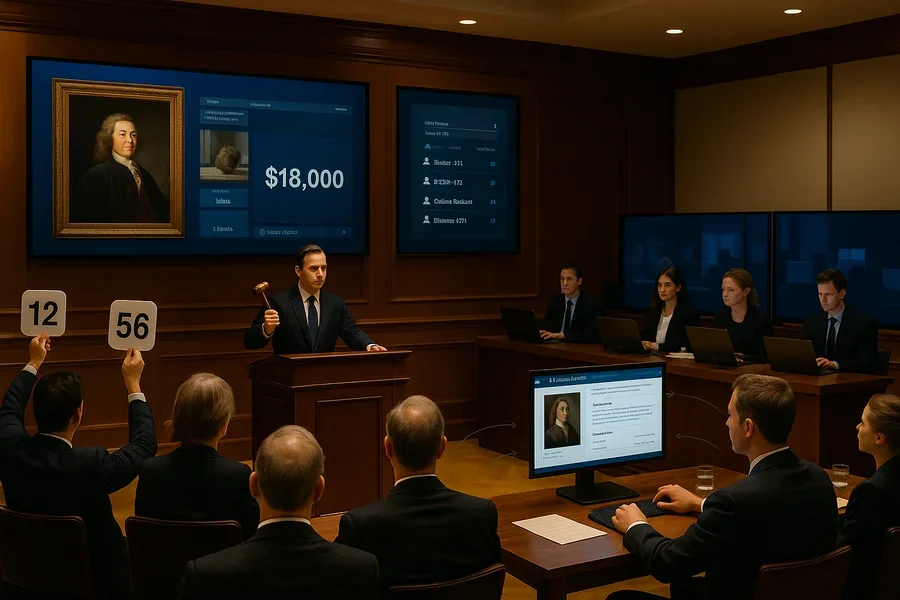
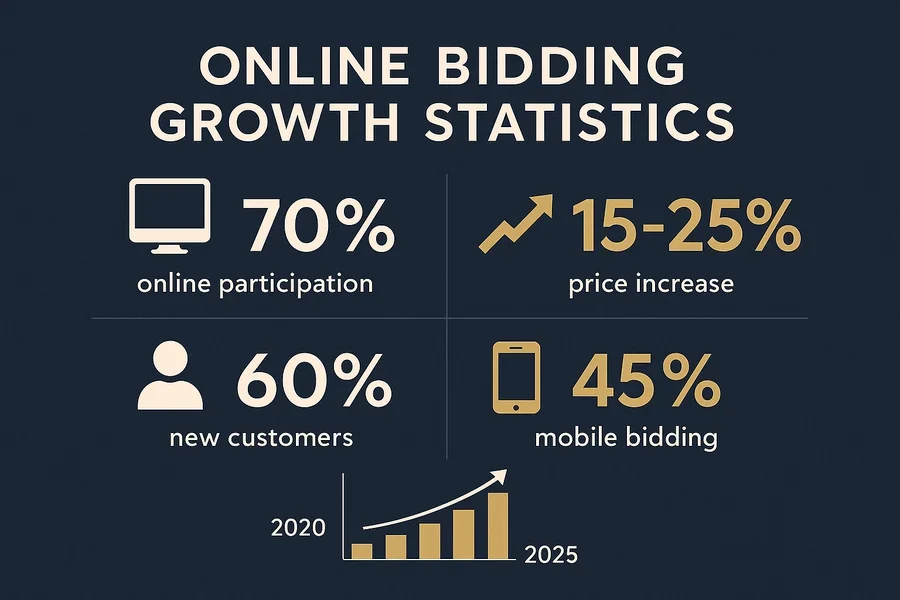
Digital participation now dominates the auction industry, with over 70% of bidders choosing online channels. Auction houses implementing robust online strategies achieve 15-25% higher average lot prices while expanding their global collector base.
Platform Selection & Technical Foundation
The platform decision comes first. Our online auction software page covers what a complete system has to include beyond the bidding page, and our timed vs. live auctions guide covers which format to run.
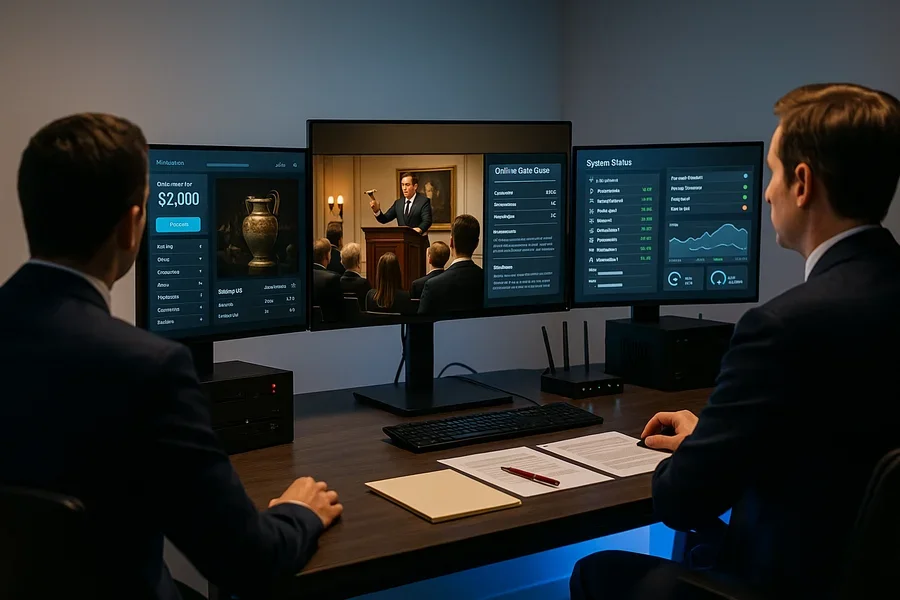
Essential features include real-time bid synchronization, mobile responsiveness, reliable connectivity, intuitive interfaces, and integrated payment systems, ideally delivered on a white-label platform under your own domain so bidder data stays with the auction house.
“We lost a $50,000 sale because our online platform crashed during final bidding.”
Critical Technical Requirements:
- Real-time synchronization: All channels update instantly
- Mobile responsiveness: Seamless experience across devices
- Reliable infrastructure: 99.9%+ uptime during sales
- Intuitive interface: Minimal learning curve for bidders
- Integrated payments: Secure, convenient settlement options
User Experience Design

Streamlined registration, clear instructions, and an intuitive bidding interface—displaying current bids, increments, and lot details—are crucial for retaining digital participants.
Registration Best Practices:
- Minimize required fields to essential information
- Offer social login options (Google, Facebook, Apple)
- Send immediate confirmation and next steps
- Provide clear auction access instructions
- Enable saved payment methods for returning bidders
Bidding Interface Essentials:
- Current bid prominently displayed
- Next bid increment clearly shown
- Remaining time until lot closes
- High-resolution images with zoom capability
- Condition reports easily accessible
- One-click bid placement
Hybrid Auction Management
Successful events require dedicated online bid spotters, visual displays showing digital activity, coordinated pacing, and technical backup procedures.
“Online bidders who feel like second-class participants simply stop participating.”
Staffing Requirements:
- Dedicated online bid spotter (not a dual role)
- Technical support person for troubleshooting
- Phone clerks for bidders preferring voice participation
- Backup staff trained on all systems
Room Integration:
- Large display screens showing online bidder activity
- Audio callouts acknowledging online bids
- Visual indicators when online bids arrive
- Equal treatment across all bidding channels
Bidder Engagement

Pre-sale virtual previews, condition videos, and expert commentary attract digital collectors. During sales, real-time chat support and instant notifications maintain engagement. Post-sale follow-up builds loyalty.
Pre-Sale Engagement:
- Virtual preview events with specialist commentary
- Detailed condition videos for high-value lots
- Email campaigns targeted to collector interests
- Social media teasers highlighting featured pieces
- Early access for registered bidders
During-Sale Support:
- Live chat support for technical questions
- Instant notifications when outbid
- Real-time updates on lots of interest
- Mobile app push notifications
- Responsive assistance for connectivity issues
Post-Sale Follow-Up:
- Immediate invoice delivery
- Payment reminders with convenient options
- Shipping coordination and tracking
- Feedback requests to improve experience
- Invitations to upcoming relevant sales
Security & Trust
SSL encryption, secure payment processing, identity verification, and transparent policies build confidence among online bidders.
Essential Security Measures:
- SSL encryption for all data transmission
- PCI-compliant payment processing
- Two-factor authentication options
- Identity verification for high-value registrations
- Transparent privacy policies
- Clear terms and conditions
- Visible trust indicators (security badges, certifications)
Mobile Optimization

Nearly 45% of online auction activity occurs on mobile devices, and the share is higher still in younger-skewing categories such as trading cards and comic books, making touch-friendly interfaces and fast loading times essential.
Mobile Requirements:
- Touch-friendly buttons (minimum 44x44 pixels)
- Fast loading times (under 3 seconds)
- Responsive images that adapt to screen size
- Simplified navigation for small screens
- One-handed operation capability
- Offline mode for poor connectivity situations
Analytics & Optimization
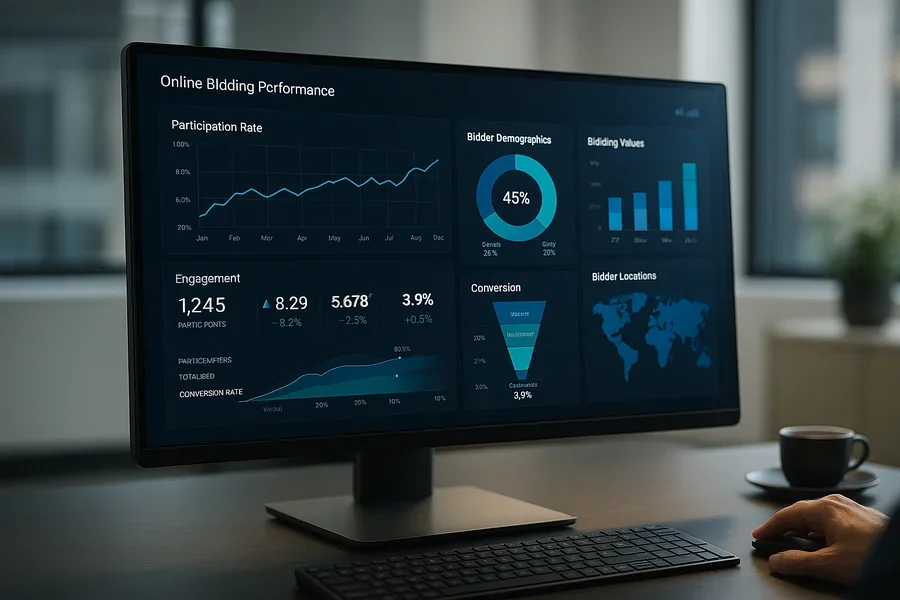
Track participation rates, conversion metrics, technical performance, and user satisfaction to continuously refine the bidding experience; the same behavioral signals reveal which bidders are ready to buy.
Key Metrics to Monitor:
- Registration-to-participation rate: How many register vs. actually bid
- Conversion rate: Percentage of visitors who register
- Average bids per participant: Engagement level
- Mobile vs. desktop usage: Platform preferences
- Peak activity times: When bidders are most active
- Drop-off points: Where users abandon the process
- Technical issues: Frequency and type of problems
- Bidder satisfaction scores: Post-sale feedback ratings
Staff Training
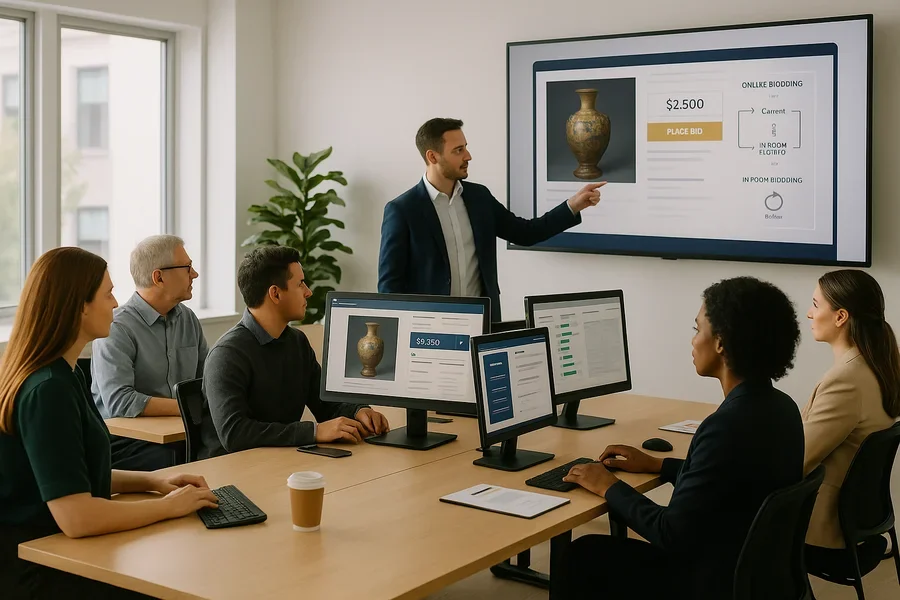
Successful programs require dedicated coordinators trained in platform operation, troubleshooting, customer service, and backup procedures.
Training Components:
- Platform operation and features
- Common technical troubleshooting
- Customer service for digital bidders
- Backup procedures and contingencies
- Hybrid auction coordination
- Analytics interpretation
- Continuous improvement processes
Global Considerations

Multi-currency displays, timezone scheduling, multilingual support, and international shipping coordination expand reach to worldwide collectors.
International Best Practices:
- Automatic currency conversion at checkout
- Auction scheduling across timezones
- Multilingual interface options
- International shipping partners
- Customs documentation support
- VAT/duty transparency
- Local payment method options
Implementation Roadmap
Phase 1: Foundation (Months 1-2)
- Platform selection and setup
- Staff training and procedures
- Initial marketing to existing bidders
- Soft launch with small sales
Phase 2: Launch (Months 3-4)
- Full-scale online integration
- Hybrid auction coordination
- Active promotion to new audiences
- Feedback collection and rapid iteration
Phase 3: Optimization (Months 5-8)
- Analytics-driven improvements
- Enhanced features based on feedback
- Mobile experience refinement
- Expanded marketing reach
Phase 4: Expansion (Months 9-12)
- International bidder targeting
- Advanced features (watchlists, alerts, etc.)
- Community building initiatives
- Strategic partnerships
Frequently Asked Questions
What 2222 platform features are most important for online bidding success?
Real-time synchronization across all channels, mobile responsiveness, intuitive interfaces, and reliable infrastructure are essential. However, the most important feature is auctioneer control—the ability to manage timing and resolve conflicts transparently.
How do I encourage bidders to participate online rather than in-room only?
Ensure equal treatment across channels, provide excellent pre-sale content (videos, condition reports), offer responsive support during sales, and demonstrate that online bids receive the same attention as room bids.
What’s the ideal ratio of online to room bidders?
There’s no ideal ratio—it depends on your market. Most successful hybrid auctions see 60-80% online participation, but what matters is total engagement and competitive bidding, regardless of channel.
How much should I invest in online bidding infrastructure?
Modern auction platforms built for auction houses, like Circuit Auction, include comprehensive online bidding as part of complete solutions, typically costing less than maintaining separate systems while delivering better results.
Do I need a separate online bidding coordinator?
Yes, for hybrid auctions. Attempting to spot online bids while managing the room creates timing conflicts and disadvantages online participants. Dedicated coordination ensures fair treatment across all channels.
How do I handle different time zones for international bidders?
Schedule sales at times accessible to your target markets (afternoon US time reaches both coasts plus evening Europe). Offer timed online-only sales for international audiences, one of the cases where the timed format has the edge over live. Provide clear timezone conversions in all communications.