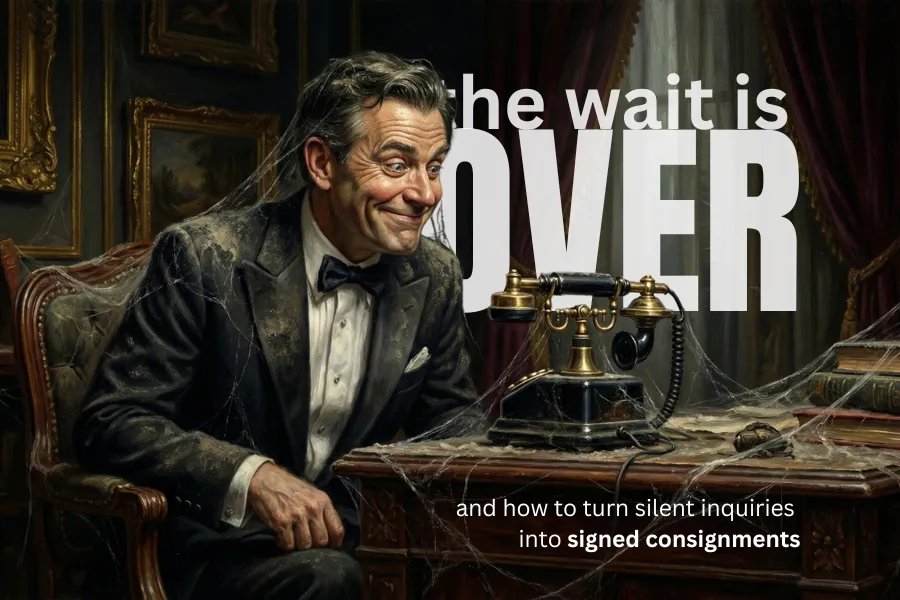
Here’s what nobody talks about: for every collection that makes it into your catalog, three or four others just disappear. They inquired. You responded. They seemed interested. Then… nothing.
It’s not your specialists. It’s not your commission structure. It’s that follow-up falls through the cracks when you’re buried in catalog production, authentication requests, and running live auctions.
One collector views your auction results three times in a week. Another downloads your consignment guide. A third attends your preview and asks detailed questions. Which one actually consigns? You’re guessing. And while you’re guessing, they’re signing with someone else.
Research across luxury sales shows 48% of inquiries never get a second follow-up. Meanwhile, 80% of people who eventually consign need at least five touchpoints before they’re ready. Do the math on how much revenue walks out the door.
The auction houses winning this game aren’t working harder. They built systems that don’t forget.
The Numbers You Don’t Want to See
Most retail businesses convert 10-15% of their inquiries into sales. Luxury retailers? Around 1-2%. Auction houses fall somewhere in between, which means 85-90% of people who contact you about consigning never actually do it.
Even among those who do consign, industry research suggests 60% or more never return for a second consignment. They had one experience, got paid, and quietly moved on.
For a mid-sized auction house doing $5-50M annually, that’s millions leaving on the table. Not because your specialists aren’t experts. Because the process of staying in touch for three to six months while someone decides whether to sell their collection requires a level of systematic follow-up that nobody has time for.
Major auction houses solve this with entire teams: client strategists, business development managers, administrative coordinators who make sure nothing falls through. Regional auction houses compensate with relentless personal attention from owners who remember every conversation.
Mid-sized auction houses? You’re stuck in the middle. Too big to wing it on personal memory, too small to staff dedicated business development teams. That’s where the revenue leak happens.
Why They Stop Responding
You know this feeling: someone seems genuinely interested, then goes silent. Here’s what actually happens:
Speed matters more than you think. When someone fills out your contact form at 2pm, they expect to hear back that afternoon. Studies show you’re 9 times more likely to convert someone if you respond within 5 minutes instead of 30 minutes. Within 5 minutes versus 24 hours? 100 times more likely. Yet most auction houses treat 24-48 hours as perfectly professional.
They’re scared of public failure. Unlike selling to a dealer for a guaranteed price, consignment means their collection gets exposed to the market. If it sells below estimate, everyone sees. If it doesn’t meet reserve, that can damage future value. Executors handling an estate feel this twice over, because they answer to beneficiaries. They’re not just selling objects. They’re putting their judgment and taste on public display.
It’s emotionally complicated. This isn’t merchandise. It’s a stamp collection they spent 40 years building. A painting they bought on their honeymoon. Coins their grandfather left them. The decision to sell requires time to process, not sales pressure. That’s why they need multiple touchpoints over months before they’re ready.
Why Technology Hasn’t Helped (Yet)
91% of businesses use CRM systems. Auction houses? Not so much. And when they try, it often fails. Here’s why:
Your cataloging software doesn’t talk to anything else. You’ve got one system for catalog production, another for your website, a third for accounting, maybe something else for email marketing. Consignor information lives in specialist email inboxes, handwritten notes, and maybe a spreadsheet somewhere. Good luck following up systematically when you can’t even see who contacted you three months ago.
Specialists aren’t salespeople. You hired them because they can authenticate an 18th century Japanese woodblock print or spot a doctored coin from 10 feet away. Not because they’re disciplined about logging contacts and setting follow-up reminders. Most see CRM as paperwork that takes time away from what they’re actually good at.
Off-the-shelf CRM doesn’t understand consignment. Generic sales software assumes you’re selling products with clear prices. Consignment involves: initial inquiry, valuation discussion, specialist consultation, maybe an in-person assessment, agreement on reserves and estimates, catalog preparation, auction, then settlement. None of this fits the “lead > opportunity > closed won” model that normal CRM expects.
Meanwhile, Christie’s and Sotheby’s have teams of business managers and client strategists making sure nothing falls through the cracks. That’s not available to auction houses running with 10-30 people total.
What Actually Works (From Last Week’s Deep Dive)
Last issue, we explored how modern auction houses identify which collectors are actually ready to sell versus which are just browsing. The short version: when someone visits your website three times in a week, downloads past results, and keeps coming back to your consignment page, that’s different from someone who looked once and never returned.
The technology exists to see these patterns automatically and alert specialists when someone’s showing real intent. That’s the intelligence layer. Now let’s talk about what you actually need to build to make it work.
The Real Reason Follow-Up Fails
It’s not laziness. It’s that auction houses operate on crisis cycles. Here’s what actually happens:
Specialists wear too many hats. You hired an expert who can tell you if that Ming vase is real or a 1920s reproduction. Now they’re also supposed to: respond to inquiries, research valuations, do consultations, write catalog descriptions, coordinate photography, handle authentication, AND remember to follow up with that collector who emailed six weeks ago. Something has to give. Follow-up gives.
Auction deadlines eat everything. You’ve got a sale in three weeks. Every specialist is buried in catalog production, lot descriptions, estimate refinements, condition reports. That collector who said they’re “thinking about it”? They’ll have to wait until after the auction. Except by then, they’ve moved on.
Memory doesn’t scale. When you’re running on 15 people, individual specialists remember their relationships. “I talked to her at the preview, I’ll call her next week.” But next week turns into next month, and there’s no system tracking who needs follow-up and when.
Nobody owns it. Is following up with consignment inquiries the specialist’s job? The owner’s? The office manager’s? When everyone’s responsible, nobody’s responsible.
What You Actually Need to Build
If your current back office keeps clients as a mailing list, start with our guide to AuctionFlex alternatives, which sets out what an auction house CRM has to do before any of the below is possible.
The auction houses solving this aren’t hiring armies of business development people. They’re building five things that make follow-up happen automatically:
1. One Place Where Everything Lives
Every inquiry email, every valuation request, every phone call, every preview conversation needs to be visible in one place. Not scattered across inboxes and sticky notes.
When your coins specialist is on vacation and someone calls asking about the collection they discussed three weeks ago, can your office manager see what was promised? Can they see that this person has visited your website four times this month? That’s what “one system” means.
Here’s where it gets interesting: Someone’s browsing your Chinese ceramics results at 10pm. Nobody’s in the office. An AI assistant notices they’ve looked at similar pieces and visited your consignment page twice. It asks: “Would you like an instant estimate for your pieces?”
They upload three photos from their phone. Sixty seconds later: preliminary valuation and a calendar link to book a specialist call tomorrow. That person was going to leave your site and call a competitor in the morning. Instead, they’re already engaged.
2. Follow-Up That Happens Even When You’re Buried
The problem isn’t that people don’t want to consign. It’s that they need time to decide, and you need to stay in their awareness without being annoying.
Someone fills out your contact form at 2:47pm. By 3:15pm, they have a personalized response explaining your process and offering three time slots for a call this week. You didn’t write it. The system did.
Three days later, they get recent auction results for pieces similar to theirs, with context about why those results matter. Not “just checking in.” Real value.
Two weeks pass. You’re in catalog hell, working 12-hour days. The system doesn’t care. It sends a case study about a consignor who was nervous about reserves and ended up exceeding estimate. That collector reads it at midnight while thinking about their decision.
Six weeks in, your specialist gets an alert: “This person viewed your site three times this week and opened every email. They’re ready.” The conversation is warm because they’ve been learning from you for weeks.
Three months later, the consignment agreement is signed. Not because you chased them. Because you stayed present and made it easy to say yes when they were ready.
3. Knowing Who’s Actually Serious
Not every inquiry deserves the same attention. Someone who downloaded your consignment guide, viewed six auction results, and opened every follow-up email is different from someone who looked at your homepage once and disappeared.
The system should flag when someone’s showing real interest, so your specialists spend time on people who are actually ready to sell.
4. Understanding What Actually Works
Which touchpoints make the difference? Is it the specialist consultation call? The market results you sent? The preview invitation?
Tracking which steps in your process actually lead to consignments lets you focus resources on what works and stop wasting time on what doesn’t.
5. Making It Easy for Specialists
The system that works isn’t the one that requires specialists to log everything. It’s the one where doing the right thing is easier than not doing it.
Automatic reminders when someone needs follow-up. Templates that maintain personal touch. Visibility into workload so you know when to redistribute.
Why Everything Being Connected Actually Matters
Here’s what changes when your consignment tracking, cataloging, bidding platform, and settlement all talk to each other instead of being separate systems:
You spot opportunities nobody else sees. The collector who bid aggressively but lost at your last auction? They’re probably ready to consign their own pieces. But only if your system automatically flags this pattern. Otherwise, that insight stays locked in the auctioneer’s head and gets forgotten by next week.
Someone attends your preview, asks detailed questions about authentication, seems genuinely interested in consigning similar pieces. Three weeks later, you have no record of who they were or what they wanted. That’s the gap unified systems close.
Specialists share knowledge without meetings. When your Asian art specialist notes during a consultation that the consignor seems motivated to sell quickly, that information should flow to whoever’s scheduling auctions. When your marketing team sees someone downloaded your Japanese prints guide three times, your specialist should know before they call.
You learn what actually drives results. Notice that June inquiries turn into consignments 40% more often than November inquiries? You should be adjusting your marketing calendar and auction timing based on that. But only if your system can actually show you these patterns.
Nothing falls through the cracks during chaos. Auction week is insane. Catalog production is worse. When everything’s connected, the follow-up emails still go out, the consultation calls still get scheduled, and that collector who’s been thinking about it for four months gets their reminder exactly when they need it.
This is what the top auction houses have that lets them win consignments even when they’re not offering better terms. It’s not magic. It’s infrastructure that doesn’t forget.
Three Questions That Matter
Before you invest in anything, answer these honestly:
Can you see which consignors are at risk of never returning? Not “I have a feeling about Sarah” - actual data showing days since last contact, estimate accuracy history, engagement signals. If a valuable consignor is drifting away, do you know before they’ve already signed with someone else?
Does follow-up happen even when your team is buried? Or does everything stop during catalog week because nobody has time? The collector who’s ready to consign in March doesn’t care that you’re in production hell. They’ll call whoever responds first.
When a collector shows intent, does someone know? Third website visit this week, opened every email, downloaded your consignment guide - are those signals visible? Or is that person’s readiness completely invisible until they’ve already committed elsewhere?
If you can’t answer these with confidence, you’re leaving revenue on the table. The auction houses winning this game aren’t working harder. They built infrastructure that doesn’t forget.
The auction industry is splitting into auction houses that treat consignment acquisition as infrastructure and auction houses that treat it as hustle. Mid-sized auction houses can’t out-hustle major auction houses with dedicated teams, and they can’t compete on brand alone against regional specialists who’ve been in the community for decades.
But they can build systems that remember, prioritize, and act when it matters. That’s the gap Circuit’s auction management software was designed to close.
Frequently Asked Questions
How do I calculate my consignor retention rate?
Start with a defined time window (typically 12-24 months for most categories). Count how many unique consignors submitted items during that period. Then count how many of those consignors came back for a second consignment within the same window or the following period. Divide repeat consignors by total consignors to get your retention percentage.
Track this by category (stamps vs coins vs art) and by consignor segment (high-value vs mid-tier) to identify where you’re strongest and where you’re bleeding opportunities.
What’s a realistic target for improving consignor retention?
Many mid-sized auction houses operate with repeat consignor rates in the 15-25% range. Improving that by even 10-15 percentage points can dramatically impact revenue, since acquisition costs are already paid. With systematic follow-up and intent tracking, aiming for 40-50% retention within 18 months is realistic.
The auction houses doing $50M+ annually often see 60%+ of their consignments coming from repeat relationships. That’s not luck - it’s infrastructure.
Our team is already overloaded. Won’t adding new systems create more work?
Done poorly? Yes. Generic CRM systems force specialists to log everything manually, which gets abandoned during catalog crunch. The right approach automates the baseline - inquiry tracking, follow-up timing, engagement signals - so specialists only jump in for high-value conversations.
Think of it this way: if your system automatically alerts a specialist when a $50K+ consignor views your website three times in a week, that’s not more work. That’s replacing guesswork with intelligence.
Do smaller auction houses really need predictive intelligence, or is that only for major auction houses?
Mid-sized auction houses benefit even more than major auction houses, precisely because you can’t afford dedicated business development teams. When your specialists are juggling authentication, cataloging, AND consignor relations, intelligence creates leverage.
A simple intent scoring model that flags “this consignor is ready” or “this relationship is at risk” prevents high-value opportunities from falling through during busy periods. You don’t need a data science team - you need a system that understands auction house workflows.
How does this connect with what you covered in the last newsletter about buyer intent?
Great question. Last issue covered how modern auction houses identify which bidders are ready to buy. The same behavioral intelligence applies to consignors - website visits, catalog downloads, email engagement all signal intent.
The difference: buying intent is about this auction. Consignor intent is about a 3-6 month relationship. That’s why unified systems matter - when someone bids aggressively but loses, that’s a consignor signal your system should catch automatically.
What if we’re already using auction management software?
Most auction houses use specialized cataloging and bidding platforms. Circuit is designed to integrate with those systems, not replace them. Think of Circuit as the relationship and intelligence layer that sits alongside your existing catalog production tools.
The goal isn’t to force you into a new front-end for everything. It’s to connect the dots between website activity, bidding behavior, consignment history, and specialist conversations - data that’s usually scattered across multiple systems.
Ready to see how this works for your auction house? Circuit Auction AI offers a free consignment pipeline audit for qualified auction houses. We’ll analyze your current drop-off points and show you exactly where revenue is leaking.